

How to Reverse Thinning Hair After Menopause: The Ultimate Guide to Regrowth
 The Scalp To Strand Set x Tangle TeezerFor supporting healthier-looking hair with gentle, everyday essentials
$82.54$66.03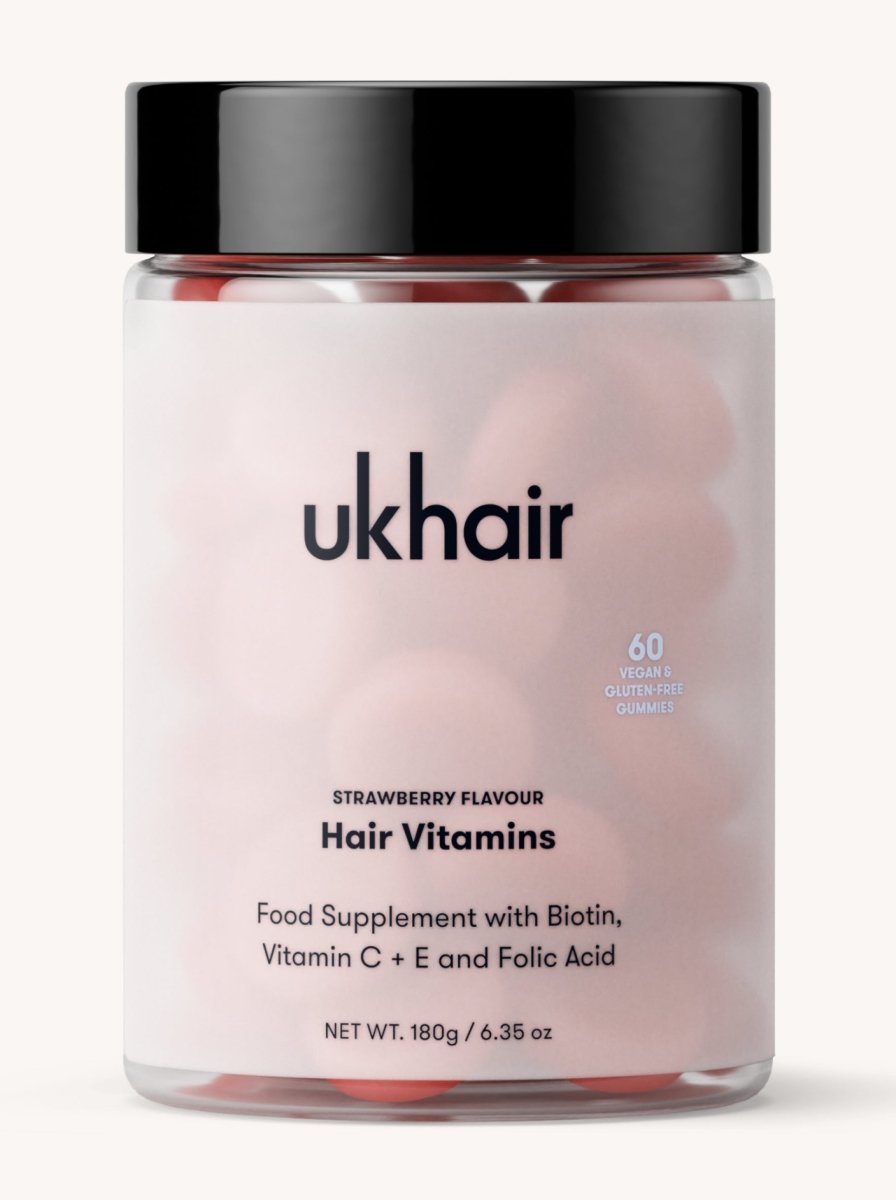
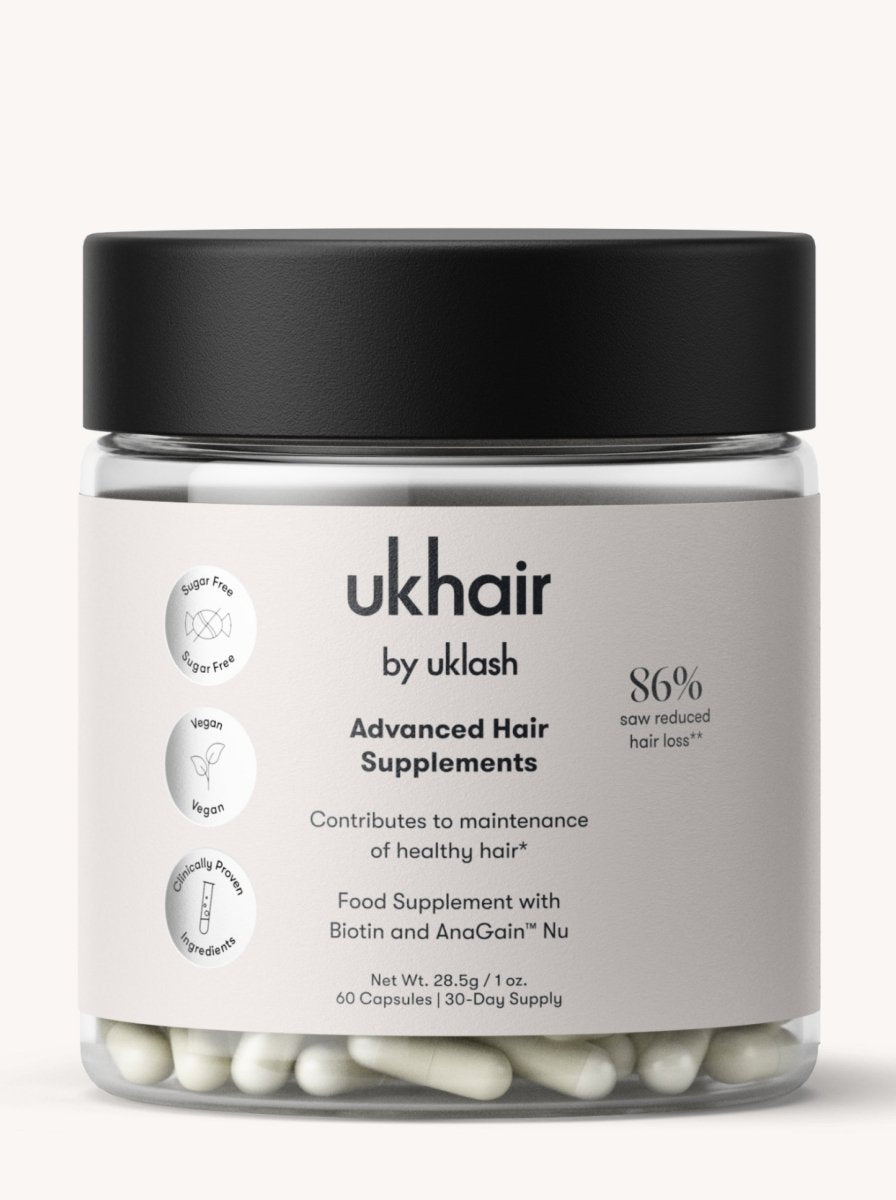 Advanced Hair SupplementsFor encouraging the appearance of stronger, longer, healthier-looking hair.
$50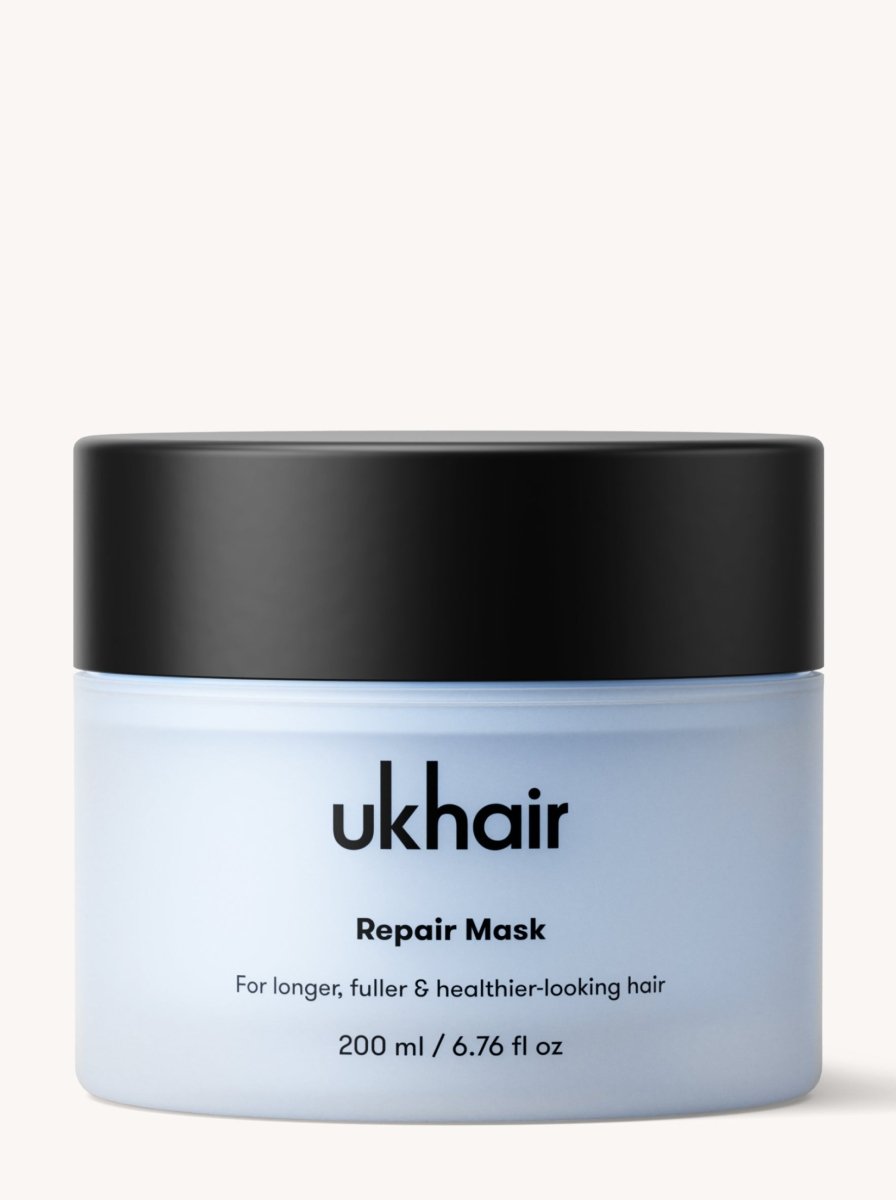

If you’re in peri-menopause, menopause or post-menopause and asking yourself “why does my hair feel thinner?” or wondering how to reverse thinning hair after menopause, you’re absolutely not alone. Hormonal shifts can do a number on your hair, but the good news is there’s plenty you can do. That’s right, from diet and vitamins to targeted hair care, let’s explore what genuinely helps you move towards thicker, stronger strands.
What’s Really Going On With Your Hair During Menopause?
As Oestrogen and Progesterone levels drop, it may cause your hair follicles to shrink which can lead you into a phase of slower growth or increased shedding. Hair may feel finer, less voluminous, or have more scalp showing, which can lead you to ask, what is good for hair growth and thickness? We’ve got a few tricks up our sleeves when it comes to that!

Does HRT Help With Hair Loss?
Hormone Replacement Therapy (HRT) can help with many menopause-related symptoms, and yes, hair changes may be among them. Because declining hormone levels are partly responsible for menopausal thinning, restoring some hormonal balance might support hair health. However it’s important to remember:
Results vary greatly person-to-person. Hair loss can have multiple triggers including nutrition, stress, genetics, scalp health, so at UKLASH we believe it’s important to try and improve as much as possible and cover all areas. HRT isn’t primarily a hair treatment. So while HRT may help, it’s not guaranteed to reverse thinning hair on its own. It’s best discussed with your GP or specialist alongside targeted hair strategies.
What About Biotin For Hair?
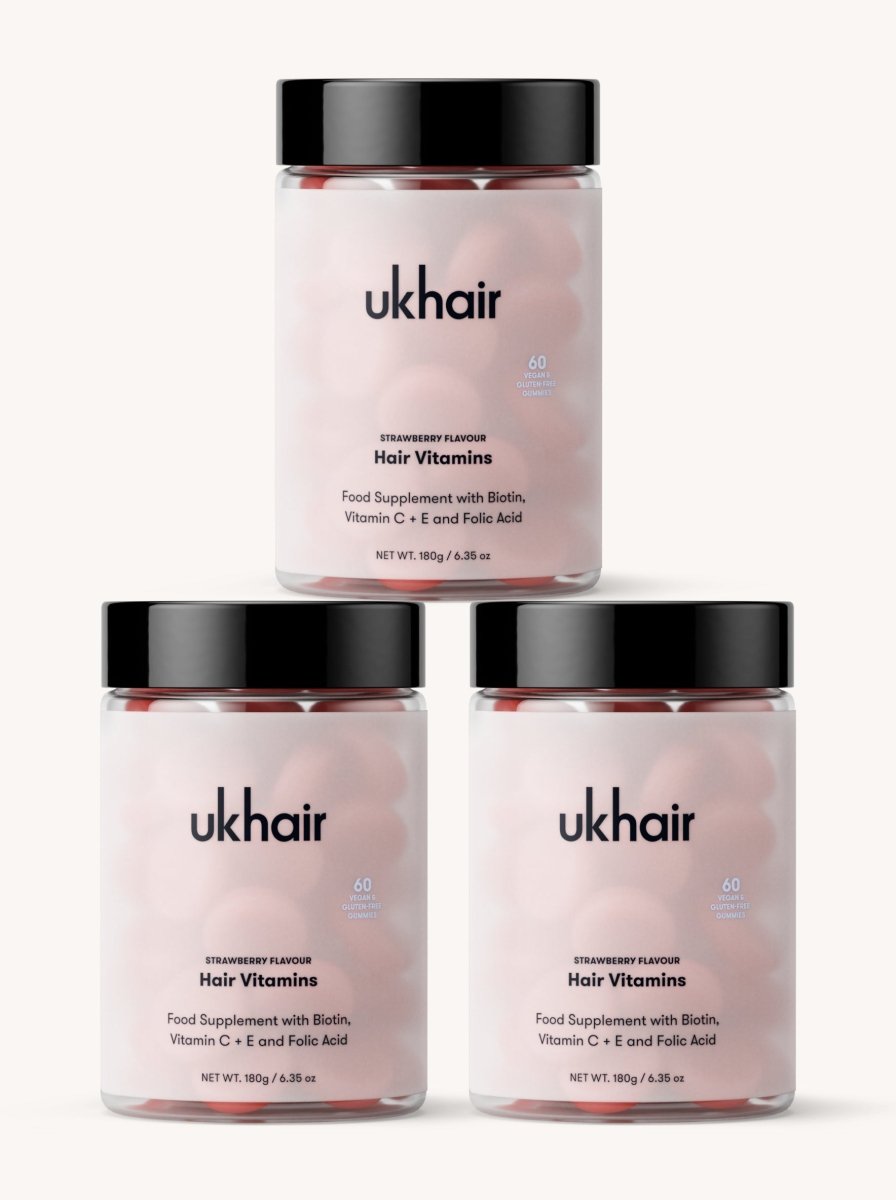
If you’re googling “biotin for hair”, you’re on the right track. Biotin (vitamin B7) plays a role in strengthening the hair shaft and helping hair follicles function well, which is why it’s a key ingredient in the UKHAIR by UKLASH Hair Vitamins. Featured inside our tasty gummies alongside Vitamins A+C, Biotin plays a vital role in processing fatty acids and boosting their effectiveness, strengthening the hair follicles and reducing hair loss. To learn more about how Biotin works for hair, head to our article here.

Foods For Stopping Hair Loss + What To Eat For Growth
You are what you eat, and when hair is thinning, nourishing your body matters big time. To increase your chances of growing back hair after menopause, try to get a healthy balance of these foods in your diet:
- Protein-rich foods: Hair is made up of around 80-85% Keratin, which is a protein, so it’s important to keep this boosted with lean meats, fish, eggs and beans.
- Foods rich in Biotin and B vitamins: Eggs, nuts, whole grains, sweet potatoes.
Foods with Iron and Zinc: Spinach, lentils, pumpkin seeds. Having low iron and zinc levels can contribute to shedding.
- Vitamin C: berries and citrus are great sources and are important for collagen production and scalp circulation.
- Omega-3 fatty acids: Salmon, chia seeds, walnuts, which are all great for scalp health.
In short, build a diet that supports strong roots so that what you do on the outside has something healthy to work with from the inside.
Focus On a Healthy Hair Routine & Topical Solutions
During a time of chaotic hormone flux, it’s important to keep your haircare routine steady and consistent with nourishing formulas that re working hard to help your hair grow.
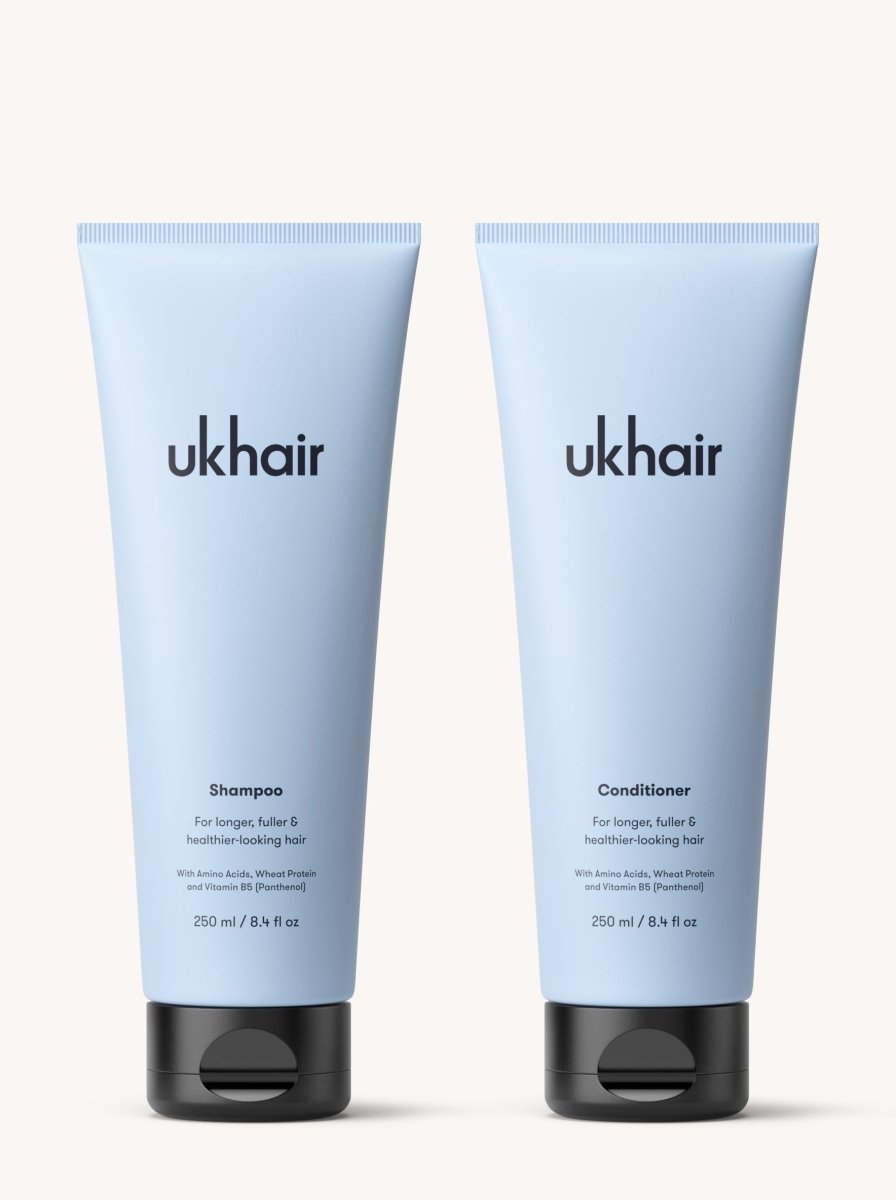
Step 1: Shampoo & Condition - Use proactive formulas such as the UKHAIR Shampoo & Conditioner which are gentle but also clarifying to get the perfect base for growth at the scalp
Step 2: Repair Mask - This bond-building formula helps to prevent breakage. It’s perfect for once weekly use and is best when left on lengths and ends for around 10 minutes to strengthen and restore the Keratin content in your hair
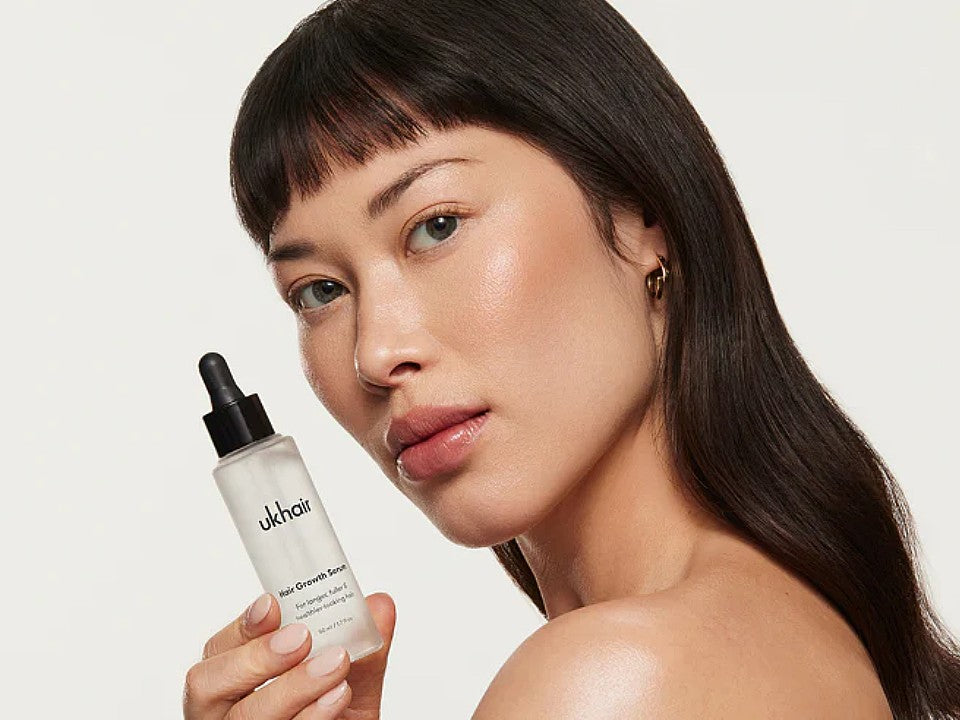
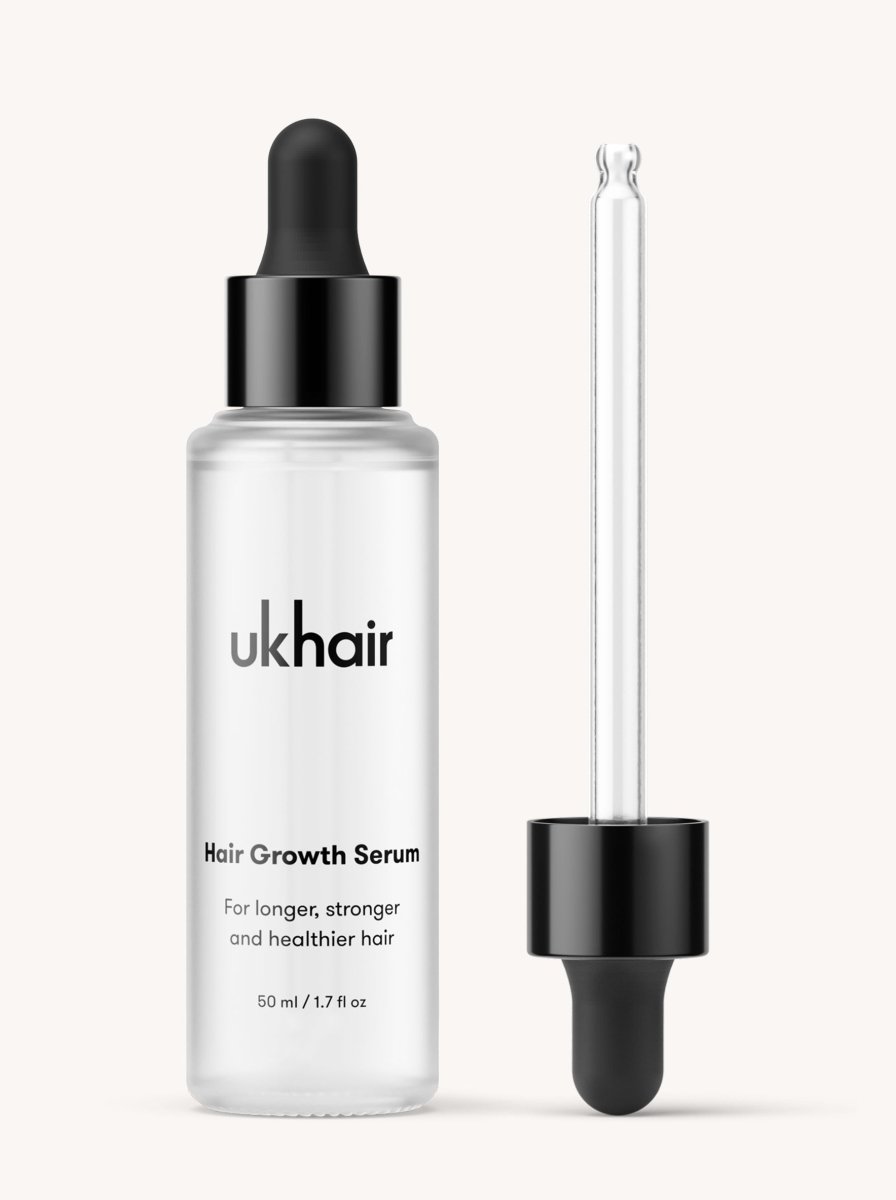
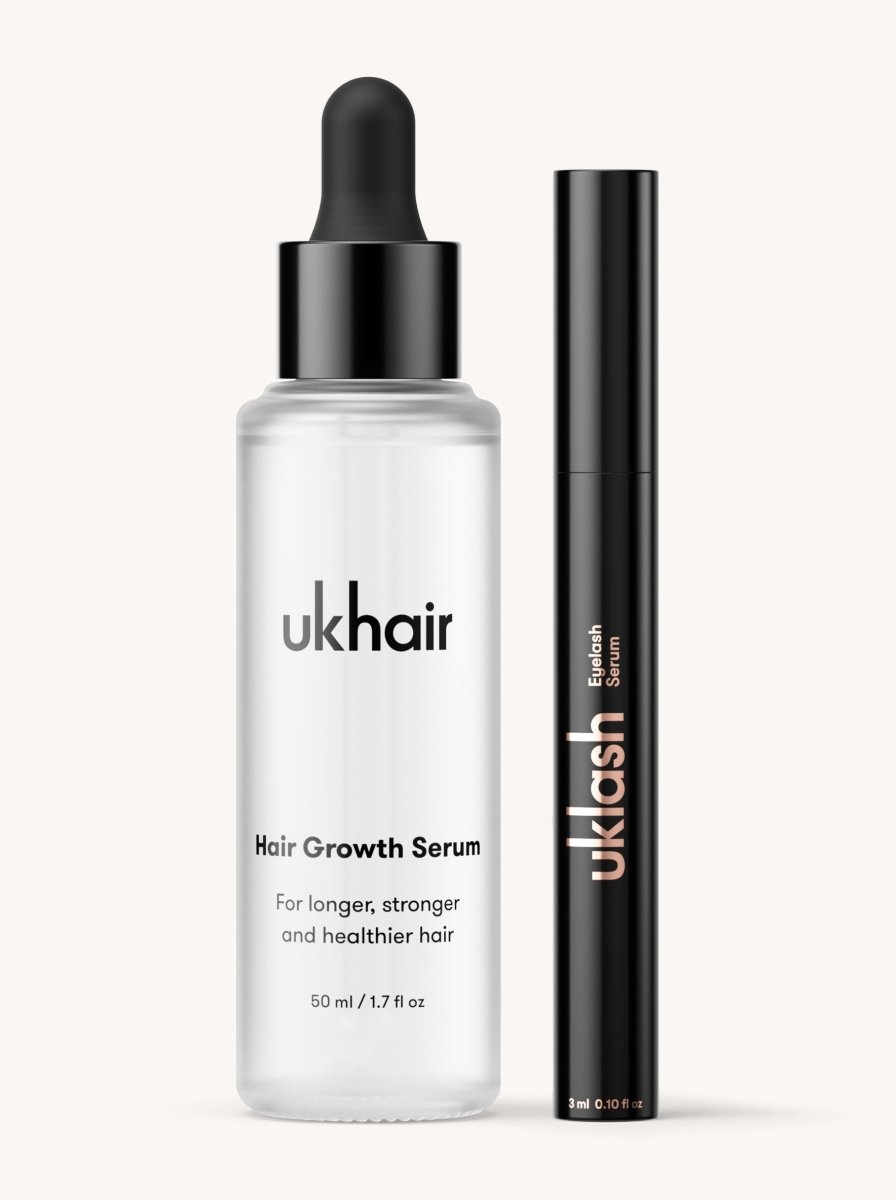
Step 3: Hair Growth Serum - This award-winning formula is loved by editors and experts alike for it’s power to encourage growth from the root. Trichologist, Kate Holden, says...

Step 4: Go Gentle On Hairstyles - It’s important to do all you can during the time of menopause to prevent any uneccessary breakage and encourage hair growth. Take a look at our article here for some tips on what hairstyles can prevent breakage
How Long Will It Take For Hair To Grow Back?
Hair regrowth takes time, especially during menopause, when hormonal changes can slow the natural cycle. The key is patience and consistency. With a balanced approach, combining a nutrient-rich diet, targeted supplements and a serum such as the UKHAIR Hair Growth Serum, you can expect steady, visible progress over several months.
Here’s a realistic timeline for menopausal thinning:
>>> Month 1 - You may still notice some shedding or that your hair feels a little finer and flatter than usual. This early stage is all about resetting your scalp and encouraging follicles to prepare for new growth.
>>> Months 2–3 - With consistent care, including daily vitamins, a powerful serum and a gentle scalp routine, you may start seeing tiny baby hairs along your hairline or crown. Shedding should begin to slow, and your scalp often feels healthier and more balanced.
>>> Months 4–6 - Your baby hairs start to thicken and strengthen, giving your hair a denser, fuller texture. You’ll likely notice more volume at the roots and improved scalp coverage.
>>> 6 months & More - This is where long-term consistency truly pays off. Hair looks visibly thicker, shinier and stronger. New growth continues to blend into your existing lengths, giving a fuller overall appearance and restoring confidence.
The secret to success? A consistent routine, gentle styling and time. Every follicle grows at its own pace, and even the healthiest hair needs months, not weeks, to transform. As we always say, it’s about staying consistent and using proactive products (and a proactive attitude) to help you to Never Stop Growing!

 6 min read / 4 August 2026Hair Longevity Explained: Why Everyone's Talking About Ageing HairWritten by Lauren Butler
 7 min read / 30 July 2026Best Hairstyles to Prevent Hair Breakage (Plus Tips for Healthier Hair Growth)Written by Lauren Butler
 5 min read / 3 July 2026Summer 2026 Hair Trends You’ll Be Seeing EverywhereWritten by Lauren Butler
 6 min read / 30 June 2026Nima Knows: Does GLP1 Cause Hair Loss?Written by Lauren Butler
 5 min read / 26 June 20264 Easy Hairstyles for Chemo Curls During Hair Growth After ChemoWritten by Lauren Butler
 7 min read / 23 June 2026Here We Grow Again: A Simple 5-Step Beauty Routine For Every DecadeWritten by Lauren Butler
 7 min read / 16 June 2026When Does Hair Grow Back After Chemo? A Complete Hair Regrowth TimelineWritten by Lauren Butler
 6 min read / 4 June 2026Does Cancer Always Cause Hair Loss? Myth-Busting Cancer and Hair LossWritten by Lauren Butler
