





How To Grow Eyelashes: The Lash Growth Cycle Explained

 The Long Lash EssentialsYour everyday lash routine for longer-looking, effortlessly defined lashes
€65,50€49
 The Lift & Grow SetFor instantly lifted lashes today and longer, fuller-looking lashes over time.
€71€63,90

If you’re trying to grow longer, fuller-looking eyelashes, there’s one thing you need to understand first - lashes grow on their own schedule.
Jump To:
What Is the Eyelash Growth Cycle?The Anagen Phase
The Catagen Phase
The Telogen Phase
Do Eyelashes Grow Back?
How Long Does It Take to Grow an Eyelash?
What Helps Eyelashes Grow?
How to Grow Eyelashes Naturally at Home
Does Vaseline Grow Eyelashes?
How Do You Get Thicker Eyelashes?
Why Are My Eyelashes Falling Out?
Unlike the hair on your head, which can keep growing for years, each eyelash has a relatively short window in which it actively grows. It then enters a transition phase, rests and eventually sheds before the follicle begins the process again. That means learning how to grow eyelashes isn’t really about finding a trick that makes every lash suddenly grow faster. It’s about understanding the natural lash growth cycle, supporting lashes the most while they're in the growth phase and then minimising unnecessary breakage or premature lash loss throughout the cycle.
Research suggests eyelashes grow by approximately 0.12–0.14 mm per day during their active growth phase, while the complete eyelash cycle may take around 4–11 months.
So, what helps eyelashes grow? How long does it take to grow an eyelash? And what can you do at home to help your natural lashes look longer, thicker and healthier?
Let’s get into the science.
What Is the Eyelash Growth Cycle?

Every individual eyelash grows from its own hair follicle at the lash line.
Like other hairs on the body, eyelashes repeatedly move through a cycle of growth, transition and rest. The three main stages are known as:
1. Anagen – the active growth phase
2. Catagen – the transition phase
3. Telogen – the resting phase
You may also see exogen described as a fourth stage. This is the point at which the old lash is released or shed as the follicle moves towards producing another hair, but really, we consider this part of the resting phase.
Crucially, your eyelashes don’t all move through these stages together. Human hair follicles cycle asynchronously, meaning one lash can be actively growing while the lash beside it is resting and another is preparing to shed.
That explains why losing the occasional eyelash is normal – and why changes to your lashes happen gradually rather than overnight.
Lash Cycle Stage 1: Anagen – When Your Eyelashes Actually Grow
Anagen is the active growth phase of the lash cycle.
During anagen, cells within the follicle are actively producing the hair shaft and your eyelash gets progressively longer.
Research says the eyelash anagen phase is approximately 4–10 weeks, although timings naturally vary between people and individual follicles.
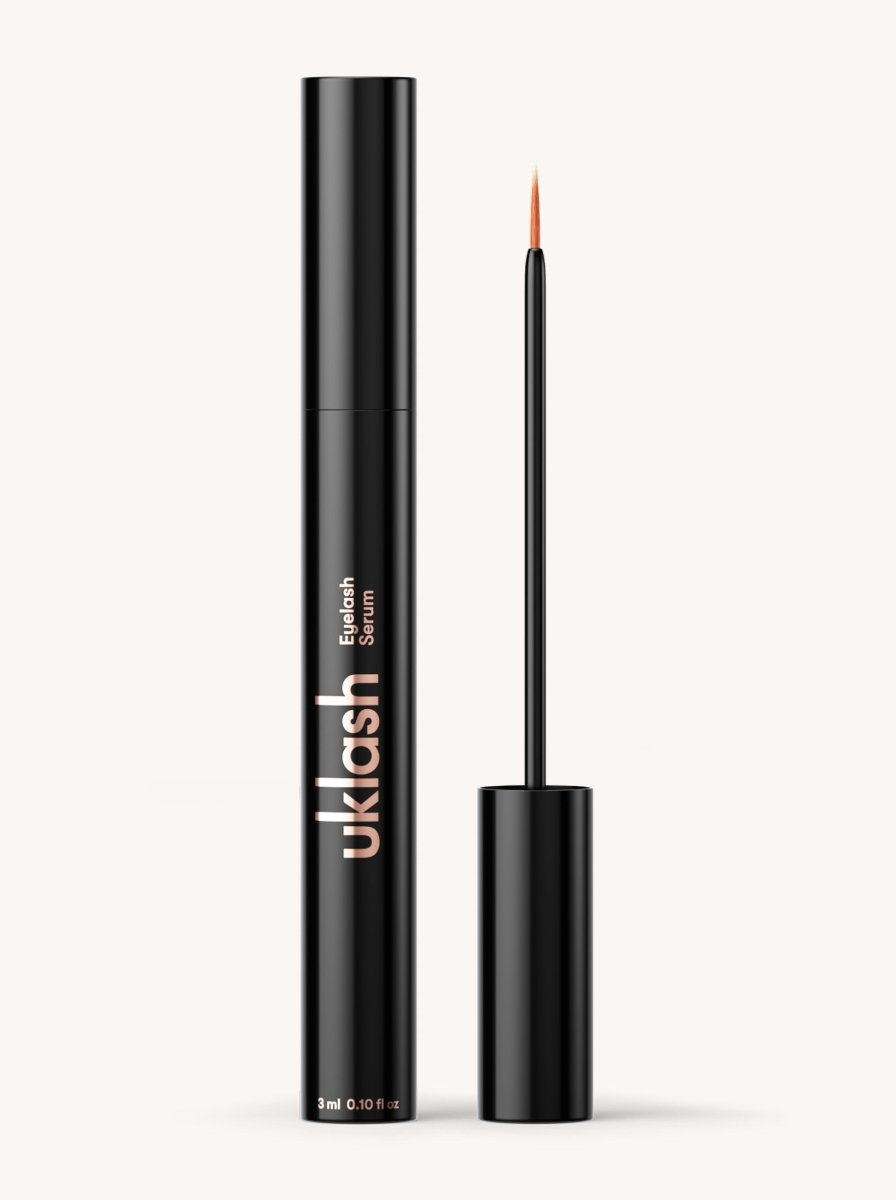
Because anagen is the period when lashes are actively growing, a consistent lash care routine is particularly relevant as different follicles enter this stage. Our UKLASH Eyelash Serum is designed to support the appearance of longer, fuller and healthier-looking natural lashes. The Original formula contains ingredients including Myristoyl Pentapeptide-17, Vitamin B5 and Green Tea extract to maximise the potential of your natural lashes during the growth phase.
Rather than applying more product in an attempt to get faster results, apply one stroke along the upper lash line once daily and look forward to visible results around weeks 4-12, when all of your lashes have had time to experience the serum within their growth phase.
Lash Cycle Stage 2: Catagen – The Transition Phase
After anagen comes catagen, the transition phase. At this point, active lash growth stops and the follicle begins transitioning towards its resting state.
The eyelash catagen phase is relatively short, lasting approximately 15 days according to published research. During this period, parts of the follicle undergo a controlled regression process and the lash stops getting longer.
The existing eyelash remains in place, but it is no longer actively growing.
This is one reason it’s important to treat your lashes gently throughout their entire cycle. Pulling, aggressive rubbing or repeatedly placing unnecessary tension on a lash isn’t the same thing as allowing it to complete its natural cycle.
Lash Cycle Stage 3: Telogen – When Your Eyelashes Rest and Shed
Finally, your eyelash enters telogen, the resting phase – and this is where eyelashes are particularly different from scalp hair.
Research shows the telogen phase lasts around 4–9 months, making it the longest part of the lash cycle. During this period, the follicle is relatively dormant and the existing eyelash remains in place without actively getting longer.
Around half of eyelash follicles may be in telogen at any one time. This is another reason patience matters when you’re trying to grow longer, fuller-looking lashes: even with a consistent routine, every eyelash isn’t actively growing at the same time.
Do Eyelashes Grow Back?
Yes, eyelashes usually grow back as long as the follicle remains capable of producing hair.
If a lash sheds naturally towards the end of its cycle, its follicle may already be progressing towards its next growth phase. If a lash is removed prematurely, however, its replacement depends on where that particular lash was within its cycle.
Because eyelashes grow asynchronously and the complete lash cycle can last approximately 4–11 months, regrowth isn’t something that happens uniformly across your lash line.
If you experience sudden, unexplained or significant eyelash loss rather than ordinary shedding, speak to your GP, a trichologist or another appropriate healthcare professional, as there may be a variety of reasons behind this and they may be able to give more tailored advice.
How Long Does It Take to Grow an Eyelash?
An actively growing eyelash gains around 0.12–0.14 mm per day but this varies person to person. While the anagen growth phase typically lasts approximately 4–10 weeks. The entire cycle from growth through rest and shedding can take around 4–11 months.
If you ask how long does it take to grow an eyelash, you’re really asking two different questions:
How quickly does an actively growing lash get longer?
Around 0.12–0.14 mm per day is the figure reported in scientific literature.
How long does the entire lash cycle take?
Approximately 4–11 months.
This also helps explain why a consistent lash routine generally needs weeks rather than days before visible changes become apparent.
Choose Your Lash Serum


What Helps Eyelashes Grow?
Your lash length and density are influenced by biology, genetics, age and the health and condition of your hair follicles. But your everyday routine can help you create a better environment for your natural lashes and reduce avoidable breakage.
If you’re wondering what helps eyelashes grow, focus on three things: supporting the natural lash cycle, keeping existing lashes conditioned and treating the lash line gently.
1. Use an Eyelash Serum Consistently
An eyelash serum is designed specifically for use around the lash line to support the appearance and condition of your natural lashes.
Different lash serums work differently depending on their formulations, so it’s worth looking beyond the words “lash serum” on the bottle and understanding what you’re actually applying.
The Original UKLASH Lash Growth Serum is our fastest-acting formula and contains a low level of a prostaglandin analogue alongside ingredients including Vitamin B5, Green Tea extract and Myristoyl Pentapeptide-17.
For those looking for a prostaglandin-free alternative, the Complex Peptide Lash Growth Serum uses a blend of six peptides and is designed to support stronger, longer-looking lashes.
There is also a Sensitive Lash Growth Serum, a prostaglandin-free formula developed for sensitive skin types.
2. Be Gentle When Removing Eye Makeup
Sometimes growing better-looking lashes is as much about keeping the lashes you already have as encouraging new ones.
Avoid aggressively rubbing or pulling at your lashes when removing mascara and eye makeup. Instead, use an appropriate eye makeup remover (like our Micellar Water) and give it time to dissolve your makeup before gently wiping it away.
The same principle applies to lash curlers, avoid tugging, pulling or repeatedly clamping the same hairs unnecessarily. Healthy-looking lashes need both growth and retention.
3. Keep Your Eyelids and Lash Line Clean
Healthy lash habits also include good eyelid hygiene.
Makeup, oils and debris can accumulate around the eyelids and roots of the lashes. Remove eye makeup properly and keep your lash line clean.
If you’ve been specifically advised to practise lid hygiene because of a condition such as blepharitis, NHS guidance recommends regular eyelid cleaning. A dedicated eyelid wash or eyelid wipe may also be recommended by an eye-care professional or pharmacist depending on your needs.
Importantly, an eyelid wash doesn’t directly make eyelashes grow faster. Think of lash-line cleansing as hygiene and eye care rather than a growth treatment.
If your eyelids are persistently red, sore, swollen, itchy or crusty, seek appropriate medical advice rather than simply adding more cosmetic products to the area.
4. Avoid Pulling at Your Lashes
Picking at mascara, rubbing your eyes or pulling at eyelash extensions can place unnecessary stress on your natural lashes.
Extensions themselves follow your natural lash cycle because they’re attached to individual natural lashes. When the natural lash eventually sheds, the extension attached to it sheds too.
If you wear eyelash extensions, follow your lash technician’s aftercare instructions carefully and never pull extensions off yourself.
Our award-winning lash serums are oil-free and are suitable for use alongside lash extensions or a great alternative to wean yourself off, as continuous lash extension use can cause damage to your natural lashes.
Or, if you're a fan of false lashes and are trying to wean yourself off with a healthier alternative, why not try magnetic lashes in the interim alongside a lash serum? This way, you can enjoy the false lash look without damaging glues, whilst growing your natural lashes with a serum. Learn more about how magnetic lashes work here.
5. Give Your Routine Enough Time
Your lashes don’t know that you’ve got an event in three weeks. They’re following a biological cycle.
That means switching products every few days because you haven’t seen an immediate transformation is unlikely to give you a meaningful idea of whether your routine is working.
We recommend using a lash serum consistently for 12 weeks, which gives lashes at different points in their cycle, time to progress. Visible changes may appear sooner depending on the product and individual.
How to Grow Eyelashes Naturally at Home
If you’re searching how to grow eyelashes naturally at home, start with realistic expectations. There isn’t a DIY trick that overrides your natural lash cycle.
Instead, your at-home routine should focus on protecting your lashes and supporting their condition:
- Remove mascara and eye makeup gently every evening
- Avoid rubbing or pulling your lashes.
- Keep your eyelids and lash line clean.
- Use lash curlers carefully.
- Never pick off eyelash extensions.
- Use a purpose-designed lash serum consistently if it’s appropriate for you.
- Follow product instructions rather than applying more serum in the hope of getting faster results.
You may see oils, petroleum jelly and other home remedies recommended online, but conditioning a lash and stimulating hair growth are not the same thing.
Does Vaseline Grow Eyelashes?
No. Vaseline does not make eyelashes grow. Petroleum jelly is an occlusive, so it can coat lashes and help lock in moisture, which may temporarily make them appear shinier or more conditioned, but it isn’t a lash-growth treatment.
To learn about this method in more detail, head to our article, Does Vaseline Grow Eyelashes? The Truth About Lash Growth.
How Do You Get Thicker Eyelashes?
If you’re wondering how do you get thicker eyelashes, it’s useful to distinguish between making an individual lash physically thicker and making your overall lash line look fuller.
The appearance of fuller lashes depends on several factors, including:
- How many visible lashes you have
- Individual lash diameter
- Lash length
- Lash colour
That’s why improving lash condition and reducing breakage can contribute to a fuller-looking lash line even though you haven’t suddenly created new hair follicles. A targeted lash serum may also improve the appearance of lash length, fullness and condition, depending on its formulation.
Why Are My Eyelashes Falling Out?
Some lash shedding is completely normal because every eyelash eventually reaches the end of its cycle. What matters is the pattern.
Finding an occasional lash is very different from suddenly developing noticeably sparse areas or losing large numbers of lashes.
Excessive eyelash loss can have numerous causes spanning from local eye and skin conditions, autoimmune disorders, infections, endocrine conditions, trauma and other factors.
Blepharitis, for example, causes inflammation around the eyelids and can produce symptoms including sore or itchy eyes and flakes or crusts around the roots of the eyelashes.
If you're noticing sudden and significant lash loss is sudden, accompanied by bald patches elsewhere, or eye pain, inflammation or changes to your vision, seek medical advice.
So, what makes eyelashes grow? Ultimately, your hair follicles do.
During the anagen phase (growth phase), cells within an active follicle produce the hair shaft and your eyelash grows at approximately 0.12–0.14 mm per day. After roughly 4–10 weeks of active growth, the follicle transitions into catagen and eventually spends months resting in telogen before the cycle starts again.
You can’t eliminate that biological cycle, and you wouldn’t want to.
What you can do is build a routine that works alongside it, keep your lash line clean, minimise unnecessary damage, condition your lashes and consistently use an appropriate eyelash serum if you want additional support for longer, fuller-looking lashes.
Whether you’re discovering UKLASH while searching for British lashes, lashes eyelashes, or the best products for eyelashes in the United Kingdom, the most important lesson is universal:
Great lashes take time and you can't fight your natural lash cycle, so it's important to work with it, not against it.
Eyelash Growth FAQs
Do eyelashes grow back?
Usually, yes. Eyelashes generally grow back as long as the follicle remains capable of producing hair. How quickly a replacement becomes visible depends partly on where that follicle is within its individual growth cycle.
If you experience sudden, significant or unexplained lash loss, it’s best to speak to a GP, Opthalmologist or another appropriate healthcare professional.
How long does it take to grow an eyelash?
An eyelash grows at approximately 0.12–0.14 mm per day during the active anagen phase, which typically lasts around 4–10 weeks. The complete lash cycle, including growth, transition, rest and shedding, can take approximately 4–11 months.
What helps eyelashes grow?
Eyelashes grow naturally from their follicles. To support longer, fuller and healthier-looking lashes, focus on a consistent lash-care routine, gentle makeup removal, minimising breakage, keeping the lash line clean and using a purpose-designed eyelash serum where appropriate.
How do you get thicker eyelashes?
A fuller-looking lash line can come from supporting lash length, condition and retention while reducing unnecessary breakage. A targeted eyelash serum, like the UKLASH serums, can also help improve the appearance of thicker, fuller lashes depending on its formulation.
What makes eyelashes grow?
Active eyelash growth happens during the anagen phase, when cells inside the hair follicle produce the lash hair shaft. Genetics, age and the health of the follicle can all influence how your individual lashes grow, aswell as the use of an Eyelash Serum.
How many stages are in the eyelash growth cycle?
There are three main stages: anagen, the active growth phase; catagen, the transition phase; and telogen, the resting and shedding phase. You may sometimes see shedding described separately as exogen, but it can be included within the final telogen stage for simplicity.
How fast do eyelashes grow?
Published research suggests eyelashes grow by approximately 0.12–0.14 mm per day while they are in the active anagen phase.
Why don’t eyelashes grow as long as head hair?
The biggest difference is the length of the active growth phase. Eyelashes usually remain in anagen for only around 4–10 weeks, while scalp hair can continue actively growing for several years. That shorter growth window naturally limits eyelash length.
Does Vaseline grow eyelashes?
No. Vaseline can coat the lashes and help lock in moisture, which may make them look more conditioned, but it is not proven to stimulate eyelash growth.
For more detail, read our guide to whether Vaseline helps eyelashes grow.
Can you use eyelash serum with eyelash extensions?
It depends on the serum, so always check the product instructions and follow your lash technician’s aftercare advice. UKLASH eyelash serums are oil-free and are designed to be suitable for use alongside eyelash extensions. For more information on using lash serum with extensions, head to our article here.
Can I use lash serum and brow serum at the same time?
Yes. You can use a lash serum and brow serum as part of the same routine. Apply each product only to its intended area and follow the individual application instructions.
Does an eyelid wash make eyelashes grow?
No. An eyelid wash is not an eyelash-growth treatment. However, keeping the eyelid margins and lash line clean can form part of good eye and lash hygiene, particularly if you have been advised to practise regular lid hygiene.
How long should I use eyelash serum?
Follow the directions for your individual serum. UKLASH recommends consistent daily use during the initial 12-week period, followed by maintenance applications as directed for your chosen formula.
When should I worry about eyelash loss?
Speak to an appropriate healthcare professional if lash loss is sudden, substantial or unexplained, if you develop noticeable gaps or bald patches, or if it is accompanied by redness, pain, swelling or other eye symptoms.

 6 min read / 24 August 2026What Are Ghost Lashes? Meet the Barely-There Lash TrendWritten by Lauren Butler
 9 min read / 16 July 2026Lash Lift Aftercare: 5 Signs Of a Lash Lift Gone WrongWritten by Sarah Parkes
 6 min read / 7 July 2026What Are Hybrid Lashes? Everything You Need to Know (And How to Get the Look Naturally)Written by Lauren Butler
 7 min read / 23 June 2026Here We Grow Again: A Simple 5-Step Beauty Routine For Every DecadeWritten by Lauren Butler
 5 min read / 10 June 20263 Easy Beauty Habits That Can Transform Your LashesWritten by Lauren Butler
 5 min read / 21 May 2026Why Centella Is The Ingredient Your Lash Routine NeedsWritten by Lauren Butler
 7 min read / 12 May 2026Nima Knows: How Long Does It Take For Lashes To Grow?Written by Lauren Butler
 5 min read / 23 April 2026Korean Lash Lift vs LVL: What’s the Difference and Which Is Right for You?Written by Lauren Butler
